Share article
The Shifting Sands of Commodity Markets: A Historical Perspective
The history of global trade is rife with examples of how seemingly minor commodities can trigger significant geopolitical events and reshape entire industries. One striking illustration dates back to December 1914, when the British Royal Navy engaged two German battlecruisers off the Falkland Islands. This intense naval confrontation, which led to the loss of two thousand sailors, was rooted in a fierce contest to secure crucial shipping routes in the South Atlantic and Pacific. At stake were vital supplies of nitrates, primarily extracted from guano – desiccated bird droppings – sourced from Chile. These nitrates were essential for the production of explosives during World War I. While German scientists ultimately synthesized nitrate production, narrowly averting a critical supply chain collapse, this episode vividly underscores the profound and often improbable impact of commodity markets on global affairs.
A Legacy of Disruption: Synthetic Alternatives Transform Industries
Throughout history, scientific and technological advancements have consistently introduced synthetic substitutes for natural products, leading to far-reaching disruptions in global supply chains, often more comprehensively than tariffs or political conflicts ever could. These innovations have profoundly altered established economic landscapes and livelihoods.
- Indigo’s Decline: In the late 19th century, the invention of artificial dyes delivered a devastating blow to the flourishing production of plant-based indigo in India, a cornerstone of its agricultural economy for centuries.
- Rubber’s Transformation: The 1930s saw the development of synthetic rubber, which rapidly displaced a significant portion of the natural rubber industry concentrated in Southeast Asia, altering its economic trajectory.
- Jute’s Challenge: From the 1960s and 1970s, the advent of lightweight woven polypropylene sacks severely impacted jute exports from Bangladesh, forcing a re-evaluation of its agricultural and industrial focus.
The Next Frontier: Lab-Grown Chocolate on the Horizon
Today, the spotlight is turning towards another natural product poised for a potential revolution: chocolate. Several innovative companies, including an Israeli start-up with support from Cadbury-owner Mondelez, are actively developing lab-grown chocolate. This process involves cultivating cells from cocoa beans and nourishing them with sugar and essential nutrients, bypassing traditional cultivation methods. With regulatory permissions anticipated, these companies are aiming to bring their products to market as early as 2027.
Profound Implications for Business and Global Supply Chains
Should lab-grown chocolate prove successful, its impact will extend far beyond being just another technological breakthrough. It highlights a growing imperative for companies to fortify their earnings and safeguard their reputations in an era characterized by increasingly volatile and politicized global supply chains. The drive towards localized, controlled production of key ingredients offers a degree of insulation from external shocks, geopolitical tensions, and environmental vulnerabilities inherent in traditional commodity sourcing.
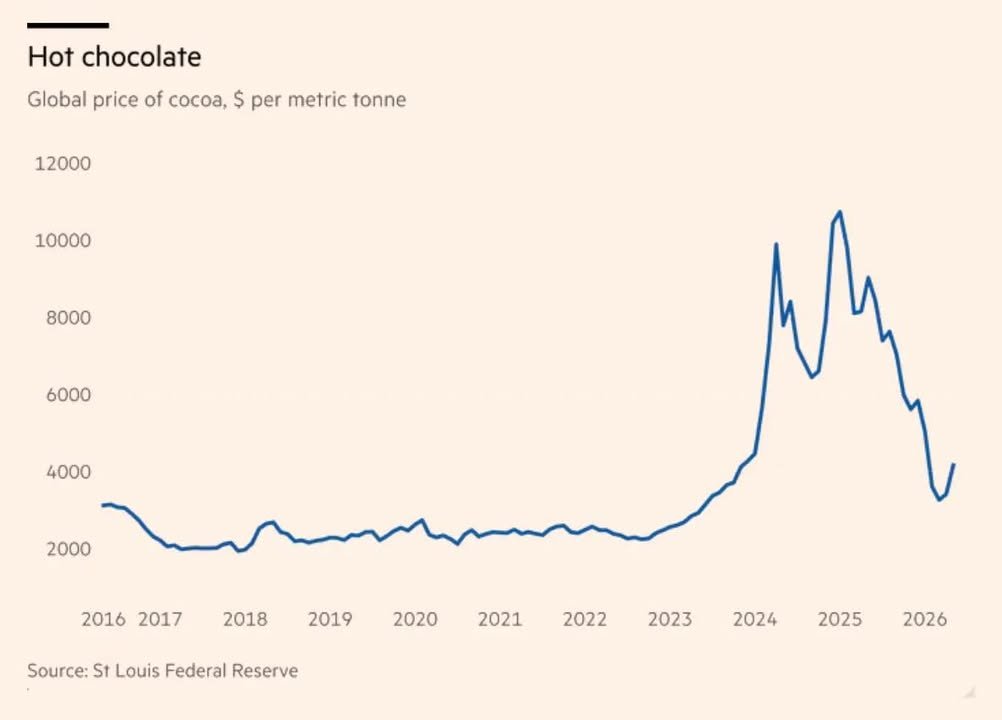
However, this innovation also presents a significant dilemma. While offering stability to manufacturers, the widespread adoption of lab-grown chocolate could dramatically reduce demand for cocoa beans, directly affecting the millions of poor West African cocoa-growers who rely on this crop for their livelihoods. This technological shift, therefore, encapsulates the complex interplay between innovation, business resilience, and the socio-economic welfare of agricultural communities worldwide.