Share article
The Elusive Path to Prosperity: China, India, and Ghana’s Development Dilemma
For nations striving for economic prosperity, the stories of China and India offer a complex, often counter-intuitive, narrative. While it’s tempting to distill their divergent paths into neat conclusions – early versus late liberalization, superior versus inferior policies, or authoritarian discipline versus democratic debate – the reality of development is rarely so straightforward. Understanding these nuances is crucial for leaders in Ghana seeking to chart a sustainable course for national growth.
In 1950, a pragmatic observer might have bet on India to outpace China. India inherited a robust institutional framework: a functioning civil service, an independent judiciary, parliamentary democracy, and a Western-educated political elite. Its leadership spoke the language of science, secularism, and progress. China, in stark contrast, emerged from decades of invasion, civil war, and ideological turmoil, embarking on a revolutionary path that would bring immense suffering and man-made disasters.
China’s Manufacturing Miracle and India’s Service-Led Ascent
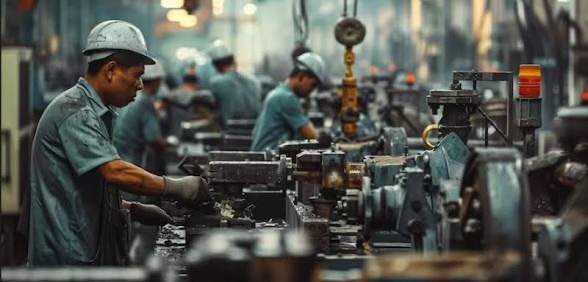
Yet, history delivered an uncomfortable verdict. China transformed into the manufacturing powerhouse of the modern age, lifting hundreds of millions out of poverty through industrialization and export-led growth. India, while becoming a large and increasingly important global economy, did not achieve the same industrial juggernaut status, instead pivoting towards a service-led growth model, particularly in information technology.
What explains this divergence? China’s success can be attributed to a relentless focus on building “mass capability” – the systemic ability to organize vast human and material resources for large-scale production, infrastructure development, and technological adoption. This involved:
- Strategic State Intervention: A directed approach to industrial policy, investing heavily in infrastructure, and fostering domestic industries.
- Export-Oriented Growth: Leveraging a massive labor force to produce goods for global markets.
- Investment in Human Capital: Focusing on vocational training and education to support its industrial base.
- Accumulation of Capital: High savings rates and state-directed investment channels.
India, while a vibrant democracy, often faced challenges in land acquisition, labor reforms, and bureaucratic hurdles that slowed down large-scale manufacturing development. Its democratic processes, while vital for civil liberties, sometimes led to slower decision-making and policy implementation compared to China’s more centralized system.
Ghana’s Reflection in the Asian Mirror
This is not merely distant Asian history for Ghana; it is a profound mirror reflecting our own development predicament and the opportunities we have missed. Just last week, we discussed Morocco’s compounding success since independence, largely driven by a remarkable coherence in national vision and execution. The China-India story offers another layer of insight into what “mass capability” truly entails and why it has been so critical for economic transformation.
Ghana, like India, has a democratic framework and access to global knowledge. However, like India (in its manufacturing context), Ghana has struggled to build the integrated “mass capability” necessary for sustained industrial growth. Our challenge is to learn from both models, understanding that neither authoritarianism nor pure liberalization is a guaranteed panacea. Instead, the focus must be on practical policies that:
- Foster Industrial Capacity: Moving beyond raw material exports to value-added manufacturing.
- Invest in Infrastructure: Roads, power, and digital connectivity are the backbone of any modern economy.
- Develop Human Capital: Aligning education and skills training with national industrial strategy.
- Ensure Policy Coherence and Stability: Reducing uncertainty for investors and businesses.
Ghana’s leadership must critically assess what specific institutional, policy, and societal conditions are needed to cultivate its own “mass capability.” The prosperity of our nation hinges not just on good intentions, but on the disciplined, strategic execution of policies that can mobilize our human and natural resources towards a shared vision of industrial and economic advancement. The time for learning from these global giants and applying those lessons contextually to Ghana’s unique environment is now.